An EpiPen is a device you use to self-inject epinephrine during a severe allergic reaction to protect your life.
What is an EpiPen?
It is an epinephrine self-injection kit. In the event of a severe allergic reaction, you use it yourself to save your life.
A person who has experienced a severe allergy (anaphylactic shock)
People who have ever experienced not only allergic hives but also systemic symptoms such as breathing difficulty, palpitations, vomiting and diarrhea, or impaired consciousness (=anaphylaxis), are recommended to carry an EpiPen in daily life. The EpiPen is a highly effective medication for anaphylaxis, but because it is also a potent drug, it may not be prescribed if the diagnostic criteria are not met.
Process for Prescribing an EpiPen
You will be asked to watch an instructional video about the EpiPen in the clinic, and after a medical examination and explanation by the doctor, a prescription will be provided. Please carry it with you at all times, for example in your bag. It is necessary to replace the EpiPen with a new one once a year.
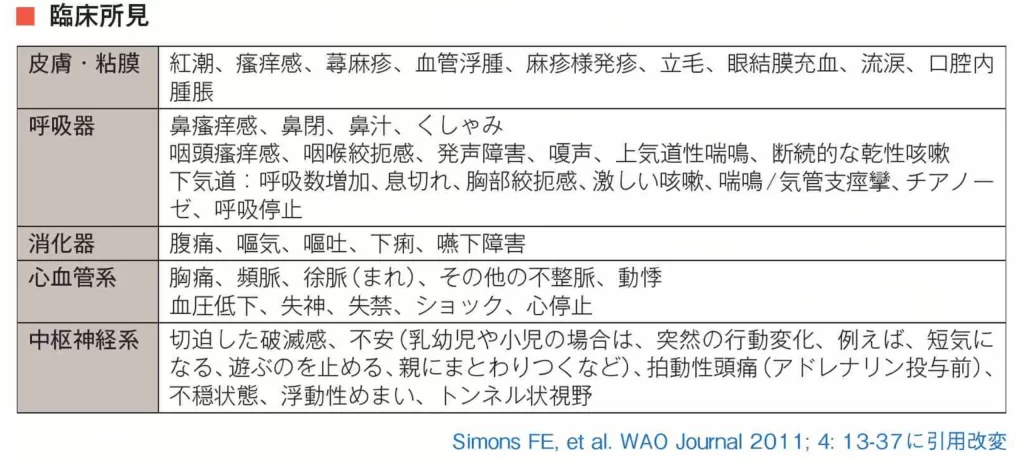
Anaphylaxis can affect multiple organ systems. Typically, symptoms occur in two or more systems among the skin and mucous membranes, upper and lower airways, gastrointestinal tract, cardiovascular system, and central nervous system.
In the early stages, it is difficult to predict the speed of progression or the eventual severity, and death can occur within minutes. Reports indicate that the median time to respiratory or cardiac arrest in fatal reactions is 5 minutes for drugs, 15 minutes for insect stings, and 30 minutes for food.
Most cases of anaphylaxis are caused by immunological mechanisms involving IgE. The most common triggers are foods, venom from stinging insects, and medications.
Clinical Findings of Anaphylaxis
Pharmacological Treatment
First-line treatment: Adrenaline (Epinephrine)
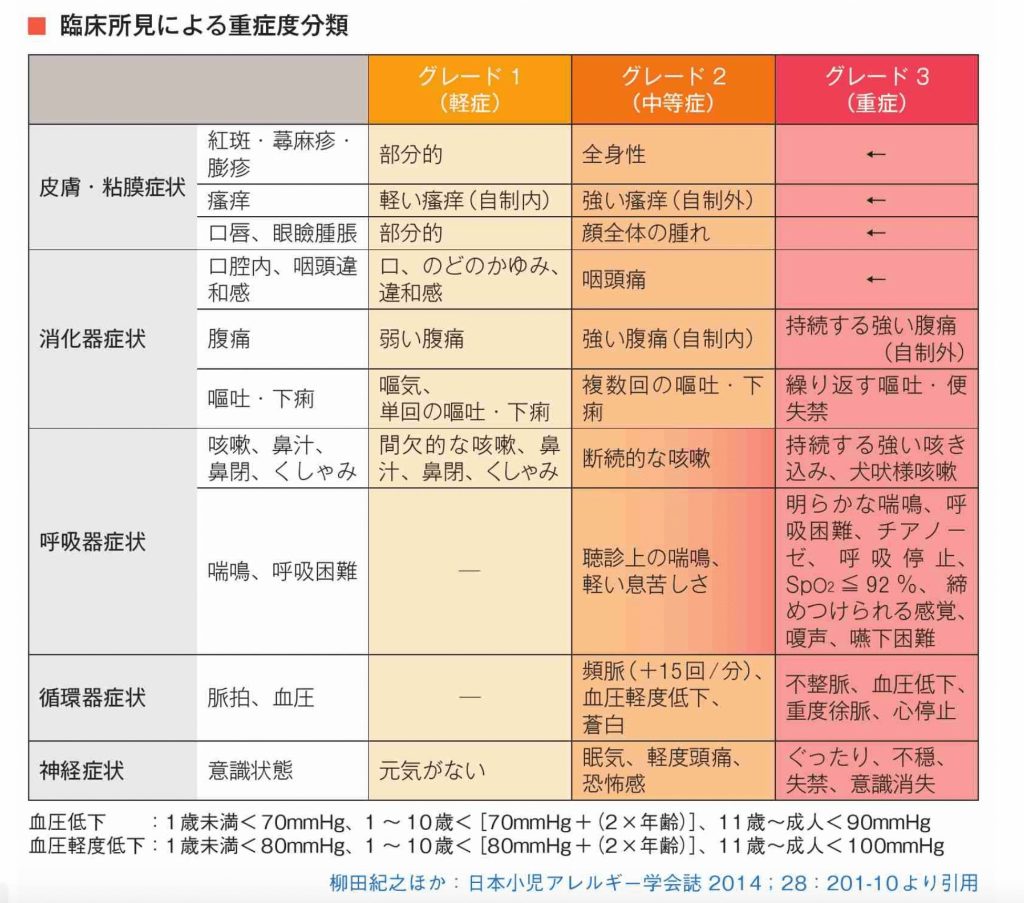
Indicated for Grade 3 symptoms in the severity classification above. In cases with a history of severe anaphylaxis or when symptoms progress rapidly, administration may also be considered at Grade 2.
When anaphylaxis is diagnosed or strongly suspected, intramuscular injection of adrenaline should be given immediately.
The plasma concentration of adrenaline peaks about 10 minutes after intramuscular injection and is reduced by half in about 40 minutes.
Because the effect of adrenaline wears off quickly, additional doses should be administered if symptoms persist.
Second-line treatment: Other than adrenaline
H1-antihistamines relieve itching, erythema, angioedema, and nasal/ocular symptoms, but are ineffective for respiratory symptoms.
β2-adrenergic agonists are effective for lower airway symptoms such as wheezing, cough, and shortness of breath, but ineffective for upper airway obstruction.
Glucocorticoids take several hours to take effect. They may help prevent biphasic anaphylaxis, but this effect has not been conclusively proven.